
Anionic Polyelectrolyte Manufacturer in India
RUB FLOCK 100 – Anionic Polyelectrolyte for Water Treatment
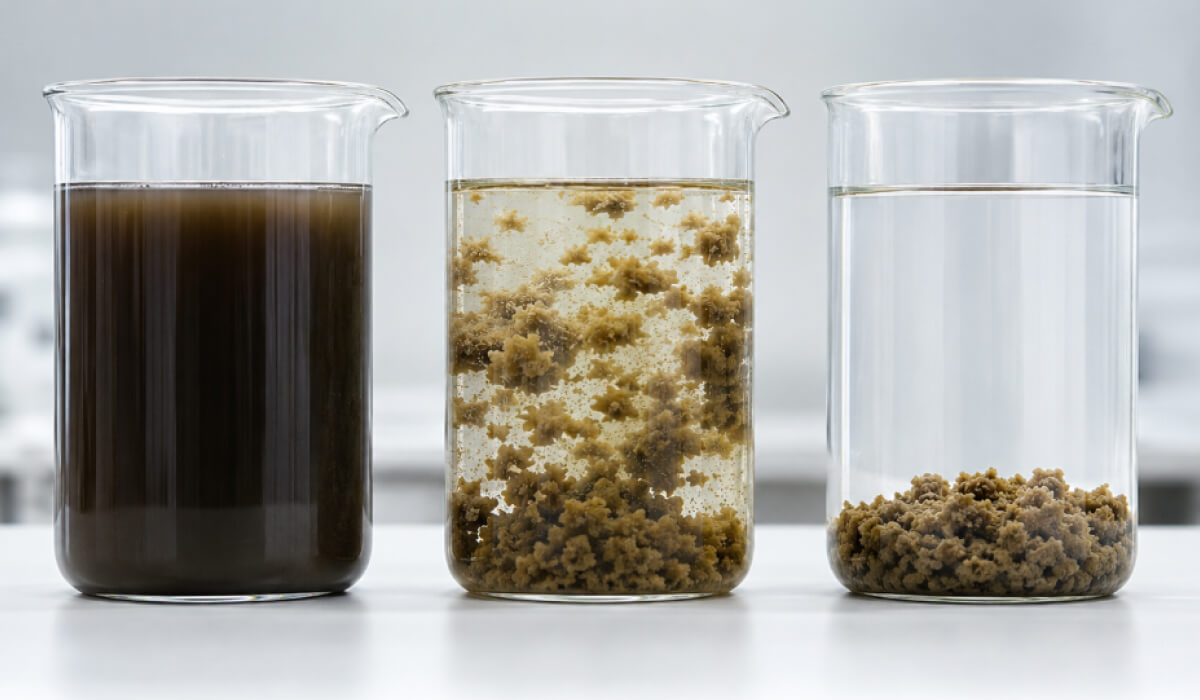
RUB FLOCK 100 is a high molecular weight anionic PAM / anionic polyelectrolyte used as a flocculant in water treatment and wastewater treatment applications. It can support clarification, filtration, settling, sludge treatment, and solid-liquid separation in industrial water treatment processes.
Need Anionic Polyelectrolyte for Water Treatment?
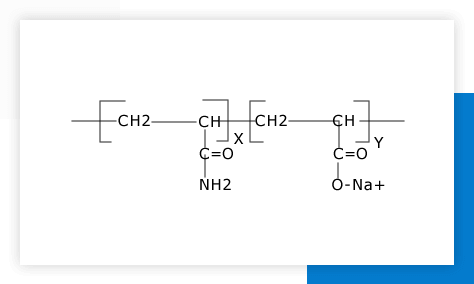
Chemical Structure of Anionic Polyelectrolyte
Physical Properties of RUB FLOCK 100
| PROPERTY | VALUE |
|---|---|
| Product Name | RUB FLOCK 100 |
| Product Category | Anionic PAM / Anionic Polyelectrolyte |
| Ionic Type | Anionic |
| Appearance | White |
| Bulk Density | 0.5–0.8 g/ml |
| Molecular Weight | Approx. 15 to 18 million |
| pH | 6 to 8 |
| Form | Powder |
| Solubility | Totally soluble in water |
| Effective pH Range | 3 to 11 (More effective at slightly alkaline) |
| Flash Point | Above 90°C |
| Hydrolysis | 20 to 30% |
| Dilution | RUB FLOCK 100 should be diluted 200 to 300 times with water before application |
Benefits of RUB FLOCK 100
- Supports flocculation in water and wastewater treatment processes
- Helps form larger and stronger flocs for improved settling
- Useful for clarification and filtration applications
- Can support sludge dewatering processes where anionic polymer is suitable
- Helps improve solid-liquid separation in industrial water treatment
- Available in powder
- Suitable for applications where anionic flocculant support is required
Application Method
- Review wastewater or suspension characteristics before selection
- Confirm dosage through lab testing or jar testing
- Prepare the product solution according to approved technical guidance
- Ensure proper mixing before application
- Confirm suitability for flocculation, settling, clarification, or sludge treatment applications
Applications of RUB FLOCK 100
| APPLICATION AREA | SUGGESTED USE |
|---|---|
| Water Treatment | Clarification and filtration of river water and industrial water |
| Wastewater Treatment | Flocculation, settling, clarification, and solid-liquid separation |
| Sludge Treatment | Condensation and dehydration of sludge, where suitable |
| Textile Wastewater | Supports treatment of wastewater from wool washing and dyeing applications |
| Mining | Sedimentation and filtration support for mining process water |
| Pulp & Paper | White water recovery and clarification |
| Metal / Steel | Treatment of metal-related wastewater |
| Process Treatment | Clarification and sedimentation support in process treatment applications |
Anionic Flocculant for Settling and Clarification
Difference Between Anionic and Cationic Polyelectrolytes
| Point of Difference | RUB FLOCK 100 | RUB FLOCK 300 |
|---|---|---|
| Ionic Nature | Negatively charged polymer | Positively charged polymer |
| Common Product Term | Anionic PAM / Anionic Polyacrylamide | Cationic PAM / Cationic Polyacrylamide |
| Common Use | Flocculation, settling, clarification, and solid-liquid separation | Sludge dewatering, flocculation, clarification, and solid-liquid separation |
| Typical Application Area | Water treatment, wastewater treatment, process clarification, and settling support | Wastewater treatment, sludge handling, sludge dewatering, and clarification support |
| Selection Depends On | Particle charge, pH, solids type, and treatment objective | Sludge characteristics, particle charge, pH, and dewatering requirement |
Packing and Availability
| PRODUCT FORM | PACKING |
|---|---|
| Powder Form | 25 kg bag |
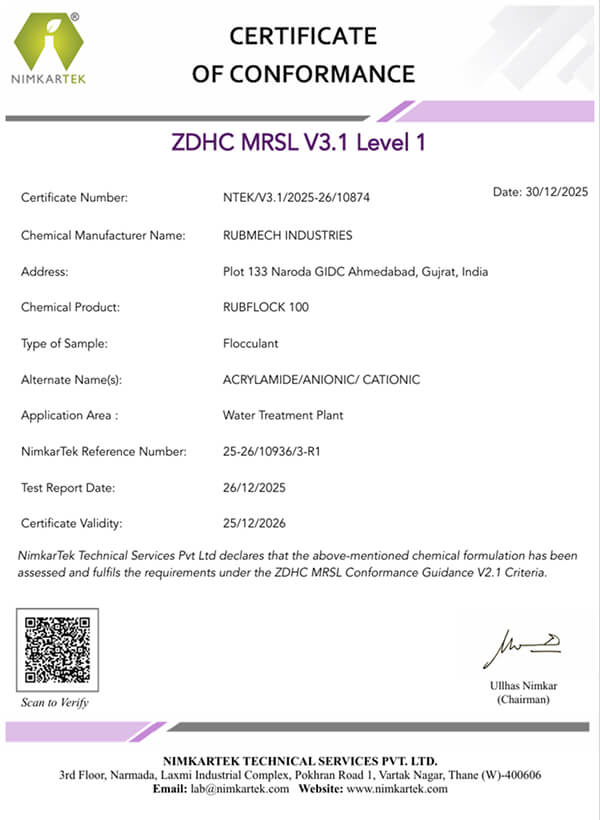
Certificate
Frequently Asked Questions
What is anionic polyelectrolyte?
What is Anionic PAM used for?
What is the difference between anionic polyelectrolyte and anionic polyacrylamide?
What is the difference between anionic and cationic polyelectrolyte?
Can RUB FLOCK 100 be used for wastewater treatment?
How is anionic flocculant used in settling and clarification?
When should an anionic polymer be selected?
Can RUB FLOCK 100 be used for sludge treatment?
Can RUB FLOCK 100 be used with other water treatment chemicals?
How should RUB FLOCK 100 dosage be decided?
Need Anionic Polyelectrolyte for Water Treatment?
Share your water treatment, wastewater treatment, flocculation, settling, clarification, or sludge treatment requirement to discuss RUB FLOCK 100 product details.
Related Water Treatment Chemicals
RUB FLOCK 300 – Cationic Polyelectrolyte
Used in wastewater treatment, sludge dewatering, clarification, flocculation, and solid-liquid separation applications.
RUB FLOCK 200 – Liquid Cationic Polyamine Polymer
Used in industrial water treatment, wastewater treatment, clarification, and coagulant-related applications.
RUB FLOCK 210 – Decoloring Agent
Used for colour removal, textile wastewater, dye wastewater, industrial effluent, and ETP treatment applications.